


FNT Blog: Heatmaps and Heartbeats DCIM Era
This level of granular detail, supported by a mix of established monitoring standards and modern API-driven integrations, enables truly proactive problem-solving. In real-world infrastructures, data rarely comes from one perfect source. It comes from many layers such as physical devices, virtual platforms, environmental sensors and distributed edge locations, each with their own interfaces and levels of reliability. That’s why flexibility matters.
Not every site is equipped with high-end managed hardware, and not every organization can justify premium instrumentation everywhere. Especially across diverse site portfolios, teams need monitoring approaches that scale from critical core data centers down to smaller technical rooms and distributed locations. Whether it’s a high-criticality environment or a compact floor IDF, the goal remains the same: staying ahead of power and temperature risks before they translate into performance degradation, corrosion-related damage, or thermal shutdowns.
Table of Contents
When alerts become actionable – even on mobile
Imagine receiving a temperature warning on your mobile device while you are off-site. In the kind of situations operations teams face every day, even a short cooling disruption can push a rack beyond recommended thresholds and if it goes unnoticed, what starts as a minor deviation can quickly turn into service risk.
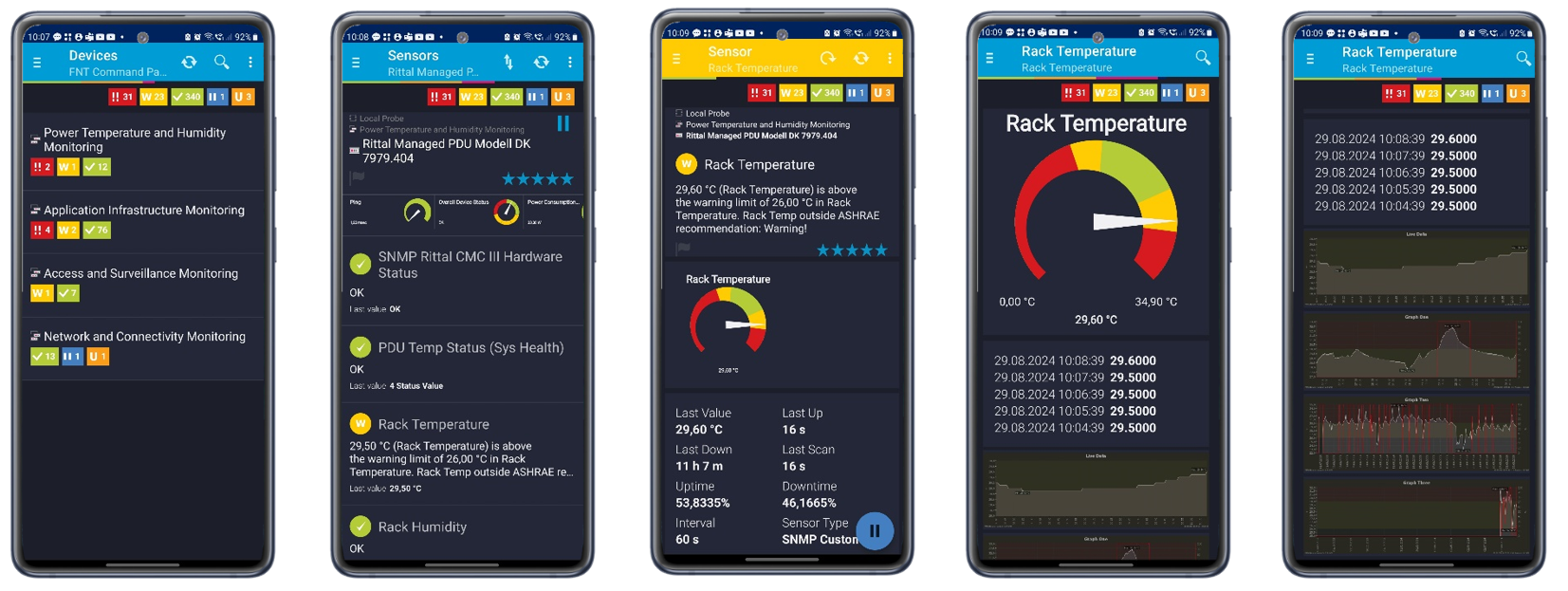
With one click on your phone, you can drill into detailed graphs showing how temperature developed over time and whether the situation is stabilizing or escalating. This is where FNT Infrastructure Health & Monitoring turns monitoring into action: alerts are not just notifications, they become an entry point into real operational context and decision-making. And in many cases, remote response goes beyond observation. If access is required on site, you can enable a technician to act immediately, for example by remotely unlocking a rack door while still keeping full visibility of the door status and access events throughout the process. This reduces the operational friction of physical keys or key cards and helps minimize both security risks and administrative overhead.
From environmental signals to efficiency and ESG impact
Furthermore, this environmental data feeds directly into FNT Analytics dashboards, empowering operators to manage Power Usage Effectiveness (PUE) and heat emission with precision. In an era where sustainability is no longer optional, these insights allow you to document your CO2 footprint and optimize thermal management to support corporate ESG goals. By identifying “stranded capacity” through real-life utilization data, you can make planning and rollout processes faster and more reliable. You aren’t just keeping the lights on; you are running a leaner, greener and more efficient operation that turns infrastructure management into a competitive advantage.
For many teams, this also creates a useful foundation for broader sustainability initiatives – for example when combining operational data with solutions like FNT Sustainability to support structured reporting and long-term efficiency targets.
Conclusion: the DCIM era is about seeing problems before they happen
The next stage of infrastructure operations is defined by having monitoring that connects directly to decision-making. When temperature, humidity and power are not only measured but made understandable and actionable across sites, teams can prevent failures, reduce waste and operate with confidence. In the DCIM era, proactive management isn’t a luxury – it’s the new baseline for resilience, sustainability and operational control.
If you’d like to explore this topic from a broader operational perspective, the next step is understanding how environmental monitoring and infrastructure transparency come together to strengthen overall digital resilience. In our blog post “Mastering Digital Resilience: How FNT Infrastructure Health and Monitoring Elevates Your IT Operations”, we take the conversation beyond individual signals like temperature or power and look at how teams can build a more resilient operating model with clearer infrastructure health insights, fewer blind spots and better decision-making under pressure.
Read more here: Source link