


3D Simulation of a Scissor Lift Collapse: Forensic Analysis
An automatic elevating platform failed during a routine loading operation. The incident, which could have caused serious injuries, provides a perfect case study for 3D reconstruction. This article breaks down the sequence of the mechanical failure through simulation, analyzing from material fatigue to structural collapse, to understand how digital visualization can prevent future catastrophes in industrial environments.
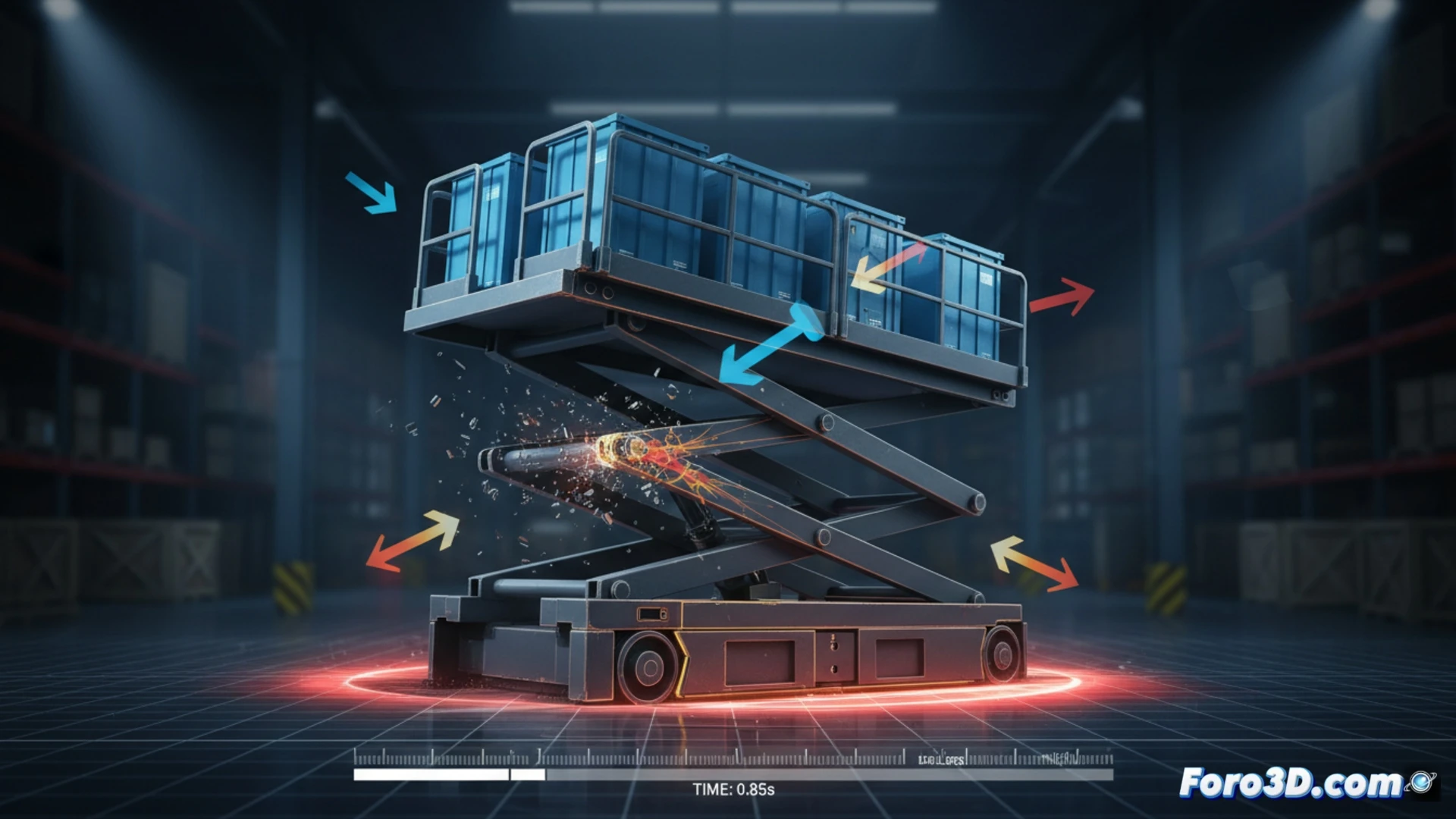
Mechanical reconstruction and dynamics of structural failure ⚙️
The simulation starts from a detailed CAD model of the platform, to which progressive overload conditions and simulated wear on the hydraulic cylinders are applied. Finite element software allows visualizing plastic deformation in the scissor arms before fracture. Subsequently, a rigid body dynamics simulation traces the load’s fall trajectory, identifying critical impact points on the ground and the base structure. This digital forensic analysis reveals that the hydraulic error, combined with fatigued welding, was the root cause of the collapse, a finding that would be difficult to obtain without the 3D recreation.
Virtual lessons for real industrial safety 🛡️
Beyond recreating the accident, this 3D simulation becomes a prevention tool. By visualizing the exact moment of failure, engineers can redesign connection points and adjust dynamic load limits. The model also allows training operators to identify early signs of hydraulic wear. In a niche where catastrophe is studied to avoid repeating it, digital reconstruction not only explains the past but builds a more robust maintenance protocol for the future.
How can forensic 3D simulation identify the exact point of material fatigue in the lifting system that triggered the catastrophic collapse of the platform?
(PS: Simulating catastrophes is fun until the computer melts down and you are the catastrophe.)
Read more here: Source link