


[Interview] Robin Gareus, Germany (lead developer of Ardour, author of the x42 LV2 plugin suite, xjadeo and Harvid video tools, developer for Harrison Mixbus)
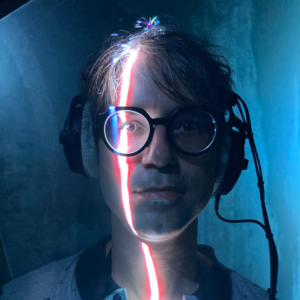
Robin Gareus is a lead developer of Ardour, the best known open source DAW on Linux. He has contributed extensively to Ardour’s codebase, implemented Ardour’s video timeline, and he contributed to Harrison Mixbus and Mixbus 32C, which are built on Ardour. He is the author of the x42 plugin collection, which includes meters.lv2 for audio level metering, fil4.lv2, a four-band parametric equalizer, dpl.lv2, a look-ahead peak limiter, fat1.lv2, an auto-tuner, sisco.lv2, an oscilloscope, and nodelay.lv2, a delay line with latency reporting. His other software projects include xjadeo, which displays a video clip in sync with jack-transport, LTC and MTC, Harvid and jack-midi-clock, and he also wrote lv2vst and scarlett-mixer. He publishes his work on GitHub under the name x42, with over a hundred repositories.
Table of Contents
You recently released Ardour 9.10, the so-called flagship DAW for Linux. What is new, and are you still as active in the development?
Yes, I am working full time on Ardour, and it is the source of my main income.
The Ardour 9.x release cycle is close to an end, and before v10 my current focus is on fixing bugs that have so far been below our radar.
The most user visible feature in Arodur 9.10 is that gain automation now also updates the waveform display. A feature contributed by Jean-Emmanuel.
ardour.org/whatsnew.html has a list for those who are interested.
You mentioned the 9.x cycle is winding down to make way for v10. What are the biggest architectural changes or long-requested features you are targeting for Ardour 10?
We do not know that yet. There is also no timeline, could be months or years. So let’s skip that question?! (There is a collection of ideas at ardour.org/future.html but that also needs updating.)
You implemented video in version 3.2. What were the hardest technical parts of putting video inside a DAW, and what new use cases did it open up?
That was 2006. The hardest part was not technical, but eventually making the software usable for others.
I initially only needed this for myself. My significant other received a grant for a film and I volunteered to do the soundtrack. Since I was using GNU/Linux I needed tools which didn’t then exist.
On the technical side, ffmpeg really does the heavy lifting for video-decoding. Writing a frame-cache lookahead decoding for the video-timeline was challenging. Due to licensing and potential patent issues with A/V codecs, the tools also had to become separate applications bundled with Ardour. During that time I learned a great deal about cross-platform portability and inter-application communication.
The most surprising use-case were various multimedia art-installations around the world. One can run many xjadeo instances to sync multiple video projections, while Ardour can be used to provide multichannel sound.
Ardour brings audio and video production together in a single session, allowing sound engineers, musicians and video editors to work within the same environment. How does it feel to help bridge these traditionally separate worlds, and what possibilities does this integration open up for post-production workflows?
Ardour does not allow for video edits (other than trimming and padding start/end). The traditional workflow is to first edit the film before starting with and mixing sound. The notable exception are music-videos.
From feedback that I received over the years it has mainly been used for low budget and arthouse short films, which I am very happy about.
xjadeo displays a video clip in sync with an external time source such as jack-transport, LTC and MTC. How do you keep picture and sound locked together when they come from different programs?
That is easier than one might expect. LTC (Linear Time Code) is an audio signal that encodes time, jack-transport and MTC (MIDI Time Code) also arrives in the audio callback. The video player just has to display the picture for the given timecode.
Your x42 plugins are professional LV2 plugins, from metering to equalizers and limiters. You have said LV2 “sucks least” among plugin formats. What does it make possible that VST and Audio Units do not?
Back when I started those in 2008, LV2 was the only viable free/libre plugin standard. VST2/3 license required to sign over your soul to Steinberg. This only changed late in 2025.
LV2 enforces strict separation of GUI and DSP and has the notion to push as many common features to the host, rather than have each plugin developer implement them. Notably LV2 is extensible. For example, for x42-meter.lv2 I was able to add inline-displays that allow meters to be shown directly in the DAW’s mixer strip. LV2 also pioneered various features such as host-provided worker threads that newer standards such as CLAP have adopted.
Since Steinberg finally moved the VST3 SDK to the MIT license in late 2025 and CLAP has adopted LV2 concepts like worker threads, does this change your long-term view on plugin formats for x42 or Ardour?
VST licensing was mainly a problem for plugin-developers, not hosts. So Ardour is not affected there. VST3 SDK was previously dual licensed and available in terms of the GPLv3.
While I took part in CLAP’s initial design and reviewed it as far back as 2015. CLAP’s killer feature is polyphonic modulation, and it isn’t worthwhile for hosts to implement it unless they also support it. Plugin authors need to provide VST3 and AU for other DAWs to begin with, so motivation to add CLAP support to Ardour is low.
x42-plugins will remain LV2 only. Adding other formats would compromise the feature set, notably inline display, and dynamic MIDI name (MIDNAM) updates, which are LV2 exclusive features.
meters.lv2 is a full collection of audio level meters. How do you decide which meters a professional needs, and what are the main design considerations?
There are basically two kinds of meters; ones that focus on the medium (e.g. digital peak, bit-meters), and ones that focus on the message. The latter ones are the main focus of meters.lv2. There are not that many meter types with proper specification from IEC that each broadcast industry established for their realm of influence, so it was not hard to include all with proper specs. Though I had significant help there, building on prior work by Fons Adriaensen.
The main design consideration is to focus on accurately following the spec. This includes rise-time, ballistics, integration time etc. Loudness and Peak Program Meters are somewhat arbitrary. Just like with a tape measure (inch, feet, cm,..) one has to learn how to read and interpret audio level meters. Meters of the same type must precisely behave identical for the same input signal, otherwise they are useless.
You release your plugins as source code and offer convenience, quality assurance and support. How has that model worked out, and how has the community responded?
Pretty well. I was inspired by Harrison to only require a license for the GUI of binary releases. That way you can share sessions with others who can play it back just fine.
Most musicians or engineers don’t want to compile from source, and the goal is to encourage users to buy the plugins or donate.
I could not make a living from them, but it is still a nice constant income on the side.
Ardour is open source and funds itself partly through a build service, and Harrison Mixbus is a commercial product built on it. How has that partnership shaped both?
Ben at Harrison saw the light in 2009 that one can build a commercial product on top of free/libre software. For Harrison the appeal was that they can reuse significant parts of the open-source ecosystem. Ardour on the other hand benefited from 40+ years of Harrison’s experience with the audio industry. They literally built the consoles that were used to produce some of the world’s greatest albums and Oscar winning soundtracks. Ardour and Harrisonaudio still have a healthy collaboration for over 15 years now. Though as a disclaimer: I do contract work for Harrison.
JACK, ALSA, LV2 and Ardour all come from different people, and they work remarkably well together. What keeps that ecosystem coherent?
Not quite. JACK was written by Paul Davis, who also started Ardour, David Robillard who is behind LV2 is also an Ardour alumni. It’s a small crowd. Yet the key is that JACK and LV2 are nicely defined interfaces.
Ardour has attracted skilled developers from around the world. How does a project this size coordinate their work, and what has been the most valuable contribution that came from outside the core team?
You are not wrong that there have been around dozen of very skilled devs involved in the past, but at any given time there have never been more than 2 1/2 persons working full-time on Ardour and we’re constantly looking to attract new developers.
Translations are probably the most significant 3rd party contribution. As for large source-code contributions, I can think of AAF and pro-tools import functionality by Adrien Gesta-Fline and Damien Zammit respectively.
Ardour is increasingly used for professional audio and video post-production. Who are your users today, and what do they ask for most?
The first rule of Ardour is: you do not talk about Ardour. 🙂 We only know about its use if someone comes to IRC or posts about it on our forum and for the most part we are happily agnostic about who our users are. Though my personal favorite was NASA using Ardour to log communication for their Morpheus lander project.
As with any authoring tool, most users barely use 10% of available features of the software. Workflow dependent this is a different feature set for each user, and feature requests highly depend on that. Folder tracks and variable time stretch are likely the most requested features by musicians that Ardour does not yet support.
jack-midi-clock turns JACK transport into MIDI clock for hardware synthesizers and drum machines. How tight can it hold sync, and how does it compare with SMPTE? Could it be used to tie several computers into a distributed, live, interactive music system?
That highly depends on the hardware. While the generator can be sample-sync, the MIDI signal on a wire has jitter on the order of a few milliseconds. It’s sufficient for synthesizers, but for studio productions there are better options, such as word-clock.
SMPTE is a Timecode format (hours:minutes:..) while MIDI Clock concerns itself with music time (bar/beat) and tempo (BPM). They are used in different contexts.
scarlett-mixer gives Linux users a mixer for Focusrite Scarlett interfaces. What is the best approach to make hardware work on Linux when the manufacturer doesn’t build for it?
First, reach out to the manufacturer. Some do provide specs and others also NFR hardware that can be used during development.
Once there is a working prototype it is also helpful to get in touch with other developers to get it into the official kernel. Distro maintainers are a candidate to contact as well in order to establish communication with kernel subsystem maintainers.
Your work reaches down to ALSA, including driver development for Digidesign and Focusrite hardware. What does it take to bring a new audio interface into the Linux audio stack?
Those were two cases where there was no support by the respective manufacturer. I reverse engineered the Focusrite protocol by running the official driver in a Windows VM on a Linux host and sniffing the USB protocol with wireshark. This requires a bit of technical expertise, patience and many sheets of paper to keep track. It is not rocket science and a good way to learn.
The Digidesign driver on the other hand was a clean-room reverse engineering of their encryption protocol. I only received a description and some data-dumps of the protocol. This required maths skills. Since it is implemented in hardware some knowledge about ASIC design and constraints thereof also helped to make some educated guesses.
What do you tell developers who want to start contributing to Linux audio?
Find a project that interests you, and that you can directly use to get some actual work done, be it mixing an Album or making new synth sounds. Yet before venturing off to create your own project, consider contributing to any of the many existing ones out there, or take over maintenance of one. I learned much of what I know by reading source-code and papers from people who shared their expertise, and so can you.
Ardour is built by people who care about control over their tools. How do you see AI-assisted features fitting into that culture?
At the moment we do not accept any LLM generated code for Copyright reasons, and the Ardour community also strongly opposes direct use of AI. Paul and me wrote a blog post about other concerns that resulted in a good discussion:
discourse.ardour.org/t/ardour-development-and-ai/113750
That being said, since version 9.3 Ardour features an MCP server. Depending on your LLM (claude, ollama, etc) it can be a passable mix assistant, a fancy MIDI composer or a huge step towards accessibility.
You mentioned Ardour’s MCP server is a huge step towards accessibility. In practice, what barriers in Ardour’s UI does it solve, and how are users actually putting it to work so far?”
Ardour’s GUI is not accessible at all, and audio plugins are neither. Braille and screen-reader support is pretty much nonexistent in that domain.
On the upside Ardour has been one of the most remote controllable DAWs, with nearly all Editing capabilities being available via OSC, and shipped an interactive scriptable command line interface. This is however rather technical. Via MCP an agent can get complete access to an Ardour session and allows an user to prompt their way. This not just allows for adding and editing plugins but timeline and MIDI editing is possible as well. One current limitation is audio content analysis.
We do not collect data of users, so I cannot answer the latter part. There are however a few outspoken persons who gravitated to GNU/Linux in the past because of a11y that we know of.
Where can people follow your latest work and releases?
Many will get it directly from their GNU/Linux distro. I do toot on mastodon.social/@x42/ and there is also github.com/x42/ and gareus.org/ Thank you for your interest.